
The real cost of missed calls — run your own numbers
Every owner knows missed calls cost "something." Almost nobody has done the multiplication. One formula, four inputs, ninety seconds — and a number you can't unsee.
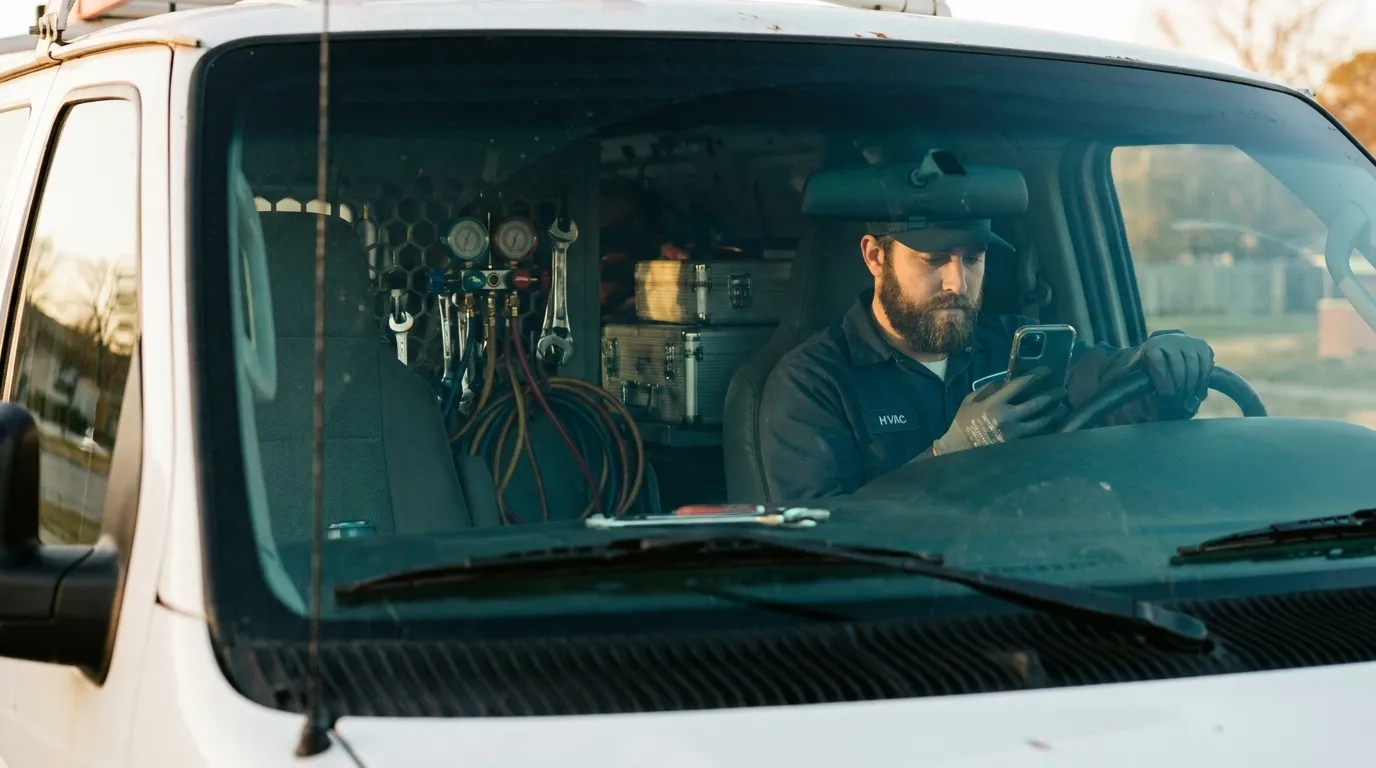
One formula, four inputs, and a calculator to estimate what unanswered calls cost you each year.
The formula: missed calls/week × % who never call back × % you'd have closed × average ticket × 52. On conservative defaults (60% never call back, 50% close rate), a business missing 6 calls a week at a $350 ticket leaks about $33,000 a year. Count your real missed calls from your phone report — most owners undercount by half.
The formula
No spreadsheet, no consultant. Annual missed-call leak =
missed calls per week × share who never call back × share you would have closed × average ticket × 52
Two of those inputs are yours (missed calls, average ticket). Two are assumptions — so let's pick them honestly:
- Share who never call back: 60%. When a call goes unanswered, most callers don't leave voicemail and don't retry — they dial the next result. The widely cited lead-response research says the same thing from the other side: contact odds collapse within minutes, not hours. If your calls skew urgent (burst pipe, toothache, arrest), 60% is generous.
- Share you'd have closed: your normal close rate. These were inbound callers actively trying to hire you — if anything they close above your average. Use 50% if you're unsure.
Try it with your numbers
The 90-second audit $630Lost / week $32,760Lost / yearTwo worked examples
The HVAC shop
Six missed calls a week — after-hours, lunch, both techs on jobs. 6 × 60% never call back = 3.6 lost callers. × 50% close = 1.8 lost jobs. × $350 basic service ticket = $630 a week, $32,760 a year. And that prices every job as a basic call — one lost $6,000 system replacement per quarter blows the estimate wide open. (This is why HVAC and plumbing is where we deploy voice agents most.)
The dental practice
Four missed new-patient calls a week — mostly lunch hour, when patients call and the front desk eats. 4 × 70% book elsewhere (patients call down a list) × 60% would have become patients × $250 first visit = $420 a week, roughly $21,800 a year — in first visits alone, before hygiene recall and treatment plans over a multi-year patient relationship.
Before you argue with the assumptions, get the real input: pull 30 days from your phone system or carrier portal and count rang-out, voicemail, and after-hours calls. Owners guess "a couple a week." The report usually says otherwise — lunch hours, Friday afternoons, and weekends never make it into anyone's memory.
What speed actually buys you
The reason this leak is fixable: it's not a demand problem, it's a latency problem. The customer already chose to call you. The widely cited lead-response studies found the odds of a lead answering and qualifying are dramatically higher when contact happens within five minutes versus even half an hour. Urgent trades compress that window to seconds — whoever answers first usually wins the job, not whoever is best.
The fixes, cheapest first
- Missed-call text-back. Any call you don't answer triggers an instant text: "Sorry we missed you — how can we help? Reply here or tap to book." It converts the hang-up into a conversation while the caller is still holding the phone. Best first dollar in this entire category.
- AI voice receptionist. Answers the call itself, quotes your pricing, books the job into your calendar, escalates emergencies. The right move when your callers are urgent and high-ticket. Full comparison in AI receptionist vs. answering service vs. voicemail.
- Do nothing ($33,000/yr at the example rates). Also a choice — now at least it's a priced one.
Frequently asked questions
How do I find out how many calls I actually miss?
Your phone system or carrier portal has a call log — count rang-out, voicemail, and outside-hours calls over 30 days, then divide by four for a weekly number. If you use a basic cell plan with no log, forward to a tracking number for two weeks. Don't guess; owners systematically undercount.
Won't spam calls inflate my missed-call number?
Some — so screen them out. A quick pass of the log removes obvious robocalls and out-of-area junk. Conservative version: cut your missed count by a third before running the formula. The number that's left is usually still uncomfortable.
We return every voicemail same-day. Doesn't that fix it?
It rescues the minority who leave voicemail. The math above is about the majority who don't — the callers who hang up and dial your competitor. Same-day callbacks also lose the speed race on urgent work, where minutes decide who gets the job. An answering service removes the callback step entirely.
Which fix should I start with?
If budget is tight: missed-call text-back — cheapest, fastest to deploy, immediate effect. If your calls are urgent and high-ticket (trades, practices, law): the voice receptionist, because those callers won't wait for a text conversation. The free call maps which fits your call pattern.